
My plants seem to be a dying. I see a lot a lot of webs on them. What is that?
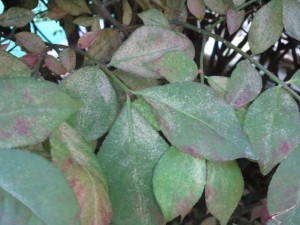 You may have an issue with Spider Mites. With hot, dry weather comes the emergence of spider mites. Spider Mites live on the underside of leaves and due to the summer conditions can be a big problem right now for some home owners, especially on burning bushes and dwarf albert spruces. Burning bushes will begin to have a mottled bleached out look and the needles on the dwarf alberta spruces will begin to brown and drop. Other favorite plants are strawberry, pepper, tomato, potato, bean and corn plants to name a few others. Spider mites puncture plant cells to feed thus damaging them. The webs they spin are to protect the colony.
How do I check for Spider Mites?
To check for spider mites hold a white piece of paper under the leafs or needles of the plant and tap. If you see small black specks about the size of pepper moving on the paper you have mites. Use a mitecide or an insecticidal soap to control. Turf Solutions can also spray your trees and shrubs.
What is a Clover Mite?
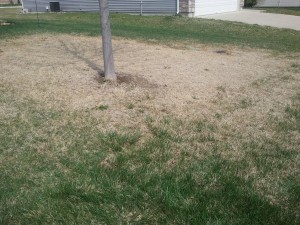
Clover mites are related to spiders and ticks. They are often found inside the house crawling around window sills and other sunny warm areas. Clover mites can be distinguished from other species of household invading mites by their reddish-green color and long front legs.
Clover mites are plant feeders, and obtain nutrients by sucking plant juices. Damage that resembles meandering silver streaks called stippling will be seen. The first areas to become infested are usually the warmer and sun exposed areas around building.
Also look at tree trunks and areas of the turf that tend to dry out.
When to look for Clover mites?
Control large populations of clover mites by watering the area infected. Heavy watering is detrimental to the mites. An over-the-counter insecticide labeled for mites can also be applied. It is advised to create a natural barrier around your house to prevent clover mites from entering. Plant geraniums, chrysanthemums, zinnias, marigolds, salvia, rose or shrubs such as barberry, juniper and yews which are unattractive to the mites.
My lawn mower is leaving tracks in my yard.
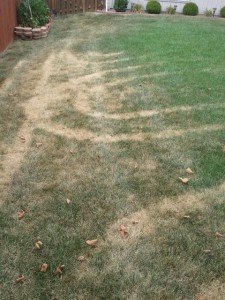
Once in a while we see customers lawns that have lawn mower tracks in their lawn for a few reasons. If the lawn becomes too dry the weight of the tires disrupts the plants vascular system causing the upper part of the plant to die back. Once cooler temperatures and moisture resumes the tracks will usually disappear leaving no permanent damage.
How do I avoid making lawn mower tracks?
To avoid this problem keep the lawn from becoming too crispy from drought or limit mower and foot traffic on the lawn when it is too dry. The other reason mower tracks appear on a lawn is from an active fungus on a lawn. When conditions are right such as high humidity, moisture on the turf canopy and an active fungus that is producing spores on the leaf blade the wheels on a lawn mowers can spread the disease.
Homeowner who are particular about their lawn can find this to be can be frustrating. Usually the turf will out grow the wheel marks. To keep fungus issues at a minimum avoid watering every day and avoid watering after 6 at night. We also recommend avoid mowing the lawn when it is damp.
What is Snow Mold?
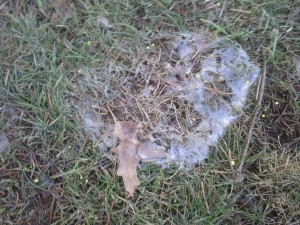
When lawns and cities experience long periods of snow cover homeowners may begin to see symptoms of snow mold. Lawns covered in snow for an extended period of time are more likely to have winter injury from a low temperature parasitic fungi because the snow cover creates a perfect micro-environment for the spores to colonize. If you see a patch of turf that is matted and has a cottony growth of mycelium a light raking will help the turf to dry out.
How do I treat Snow Mold?
Fungicides are not recommended unless there is a history of the disease or the lawn is highly valued such as a golf green or sports field. Preventive fungicide applications should be done in the late fall as close to permanent snow as possible. This will help to prevent premature losses of the fungicide due to rain or sun.
What are Voles?
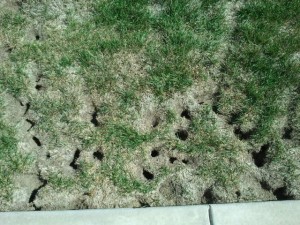 Why do I have trails running through my yard? You may have a mouse-like rodent called a vole. Voles are distinguished from a mouse by their short tails, stocky bodies and short legs. Under ideal conditions voles produce from March through October. They can produce litters of three to eight young about every 21 days. Females can reach maturity in 35 to 40 days and start raising litters of their own. The life span of a vole last from about 2 to 16 months.
Voles create trails throughout the yard by eating the grass down to the crown. These trails are more evident during the winter months when the lawn is not actively growing. Trails lead to small holes that go down to underground runways and nesting areas. Voles are not limited to eating grass but can also damage nearby landscape plants. Flowers, shrubs and trees are all susceptible to damage from vole foraging.
How do I get rid of Voles?
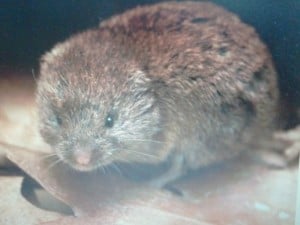 Controlling voles is relatively easy. A mouse trap baited with a small piece of apple or peanut butter-oatmeal bait will also work. Place the trap under a roof shingle or small board approx. 3 inches off the ground to give the vole a place for cover. Set the trap at right angles to the run and set back- to- back within the run. Using a rodenticide may be the easiest way to control unwanted voles. Most of these are an anticoagulant. The Grass Pad sells a Mole and Gopher pellet that is placed around the runs and holes. A rat and mouse rodenticide , d-Con is also labeled for voles. Remember all rodenticides are designed to kill mammals. Take reasonable precautions and follow label directions so that non-target animals are not harmed.